Importing a car from Germany to Portugal can save between 15% and 35% on the final vehicle price compared to the same car bought locally — but the process requires technical knowledge and patience. In 2026, more than 100,000 vehicles were imported into Portugal, with Germany leading among countries of origin. This complete guide covers everything you need to know: from finding the right car to Portuguese registration, with real costs, timelines and common pitfalls.
Complete guide to importing cars from Germany to Portugal: real costs, ISV, steps, brands and marketplaces. Save 15-35% on your next used car.
Table of Contents(11 sections)
- Why Import a Car from Germany?
- How Much Does It Cost to Import a Car from Germany to Portugal?
- Is It Worth Importing Cars from Germany?
- Step by Step: How to Import a Car from Germany
- Most Imported Brands and Models from Germany
- Common Risks and How to Avoid Them
- Direct Import vs Professional Importer in Portugal
- When Should You Seek a Specialist Lawyer?
- German and Dutch Marketplaces: Where to Search
- Frequently Asked Questions
- Are You Looking for Clients for Your Importation Business?
Why Import a Car from Germany?
The German market offers unique advantages: a vast fleet with millions of used vehicles in excellent condition, a rigorous maintenance culture (always-registered services), competitive prices on premium brands (BMW, Mercedes, Audi, Porsche) and wide availability of versions unavailable in Portugal (V6/V8 engines, M-Sport packages, rare interiors). For 2-5 year old cars, average savings after all taxes range around 20-30% versus the equivalent Portuguese price.
How Much Does It Cost to Import a Car from Germany to Portugal?
Total import cost to Portugal includes several components that are essential to understand before moving forward:
- Vehicle price in Germany — the base, obviously. Typically 15-25% cheaper than in Portugal for the same car
- Transport Germany → Portugal — €800-€1,800 by specialist truck, or you can drive and bring the car yourself (2-3 day cycle)
- ISV (Vehicle Tax) — the biggest cost, calculated by displacement + CO2. For a BMW 320d petrol/diesel it ranges €3,000-€7,000, for a Mercedes AMG V8 it can reach €15,000+
- IUC (Annual Circulation Tax) — yearly, based on CO2 and displacement
- B Inspection (adaptation) — €150-€300 for legalisation in Portugal
- Definitive registration — €150-€250 in IMT fees
- Document legalisation — sworn translation of the European Certificate of Conformity €50-€150
Typical total for a €25,000 car in Germany: around €32-38,000 turnkey in Portugal (versus €40-45,000 in a national dealership). Average savings: €7-12k per car.
Is It Worth Importing Cars from Germany?
Depends on car type and your profile as buyer. Very worth it for:
- Premium cars above €25,000 (BMW, Mercedes, Audi, Porsche) — proportional savings are higher
- Specific rare versions in Portugal (V6/V8 engines, AMG/M-Sport packages, Audi RS)
- Buyers with patience to wait 4-8 weeks for the full process
- Those with technical knowledge to verify the car or access to certified inspector
Not as worth it for:
- Cars below €15,000 — proportional savings are lower and fixed costs weigh more
- Those needing the car in less than 2 months
- Very popular models already with abundant stock in Portugal (Golf, Astra, Corsa)
Step by Step: How to Import a Car from Germany
1. Research and Car Selection
Main German sites for researching used cars: mobile.de (the country’s largest, equivalent to OLX), autoscout24.de (second largest, with advanced filters), auto.de and wirkaufendeinauto.de. Professional tip: use filters for “Scheckheftgepflegt” (always-registered maintenance) and “Unfallfrei” (accident-free). Prefer dealers with rating >4.5 and many reviews.
2. Vehicle History Verification
Before buying, always check: Carfax Europe or Autovista for accident history and real km, physical or digital service book, number of previous owners (ideal: 1-2), current and past technical inspections (TÜV). For premium cars, hire certified inspector (ADAC or similar) for €200-€400 — worth every cent to avoid surprises.
3. Negotiation and Reservation
Prices on German sites are typically negotiable by 5-10%. Important: only pay deposit (€500-€1,000) after seeing detailed photos and video of car in operation. Use SEPA transfer for the deposit (reversible in case of fraud) and request invoice/receipt. Never pay full amount before having the car.
4. Transport to Portugal
Three main options: specialist truck (€800-€1,800, 7-14 days, car arrives without extra km), own driving (3 days Germany-Portugal, but car gains 2,000 km and will need fuel and tolls), roll-on/roll-off transport company by sea (cheaper but slower, 2-3 weeks). For premium cars, always prefer enclosed truck.
5. Legalisation in Portugal — ISV and Registration
Once the car arrives, you have 20 days to initiate the legalisation process. Documents required: original European Certificate of Conformity (COC) or sworn translation, German property document (Fahrzeugbrief), purchase invoice/declaration. ISV payment calculated automatically at Finanças (Portal das Finanças). B Inspection at an authorised IPO centre. Definitive registration at IMT.
Most Imported Brands and Models from Germany
BMW
The most imported brand. Popular models: 3 Series (320d, 330i, M3), 5 Series (520d, 530e, 540i), X3 and X5, M2/M4. German market offers N47 TÜ engines (3 Series pre-2015) or B47 (post-2015) with complete history. Typical savings: €4-10k on a recent 3 or 5 Series.
Mercedes-Benz
Second most sought-after brand. A, C, E and GLC classes are the most imported. AMG versions (C43, C63, E53) represent about 15% of imports — savings on these models can reach €20,000 on V6/V8 versions. Tip: prefer units with “ServiceHeft” (original Mercedes service book).
Audi
A3, A4, A5, Q3 and Q5 lead imports. RS models (RS3, RS4, RS6) are particularly sought-after by enthusiasts — savings of €10-25k versus Portuguese dealerships. The S line package is standard on many German versions and rare here.
Volkswagen
Golf, Passat, Tiguan and Touareg. GTI, R and TDI versions with powerful engines dominate. German market offers plenty of company cars with 1-3 years and controlled km — ideal for those looking for quality/price ratio.
Porsche
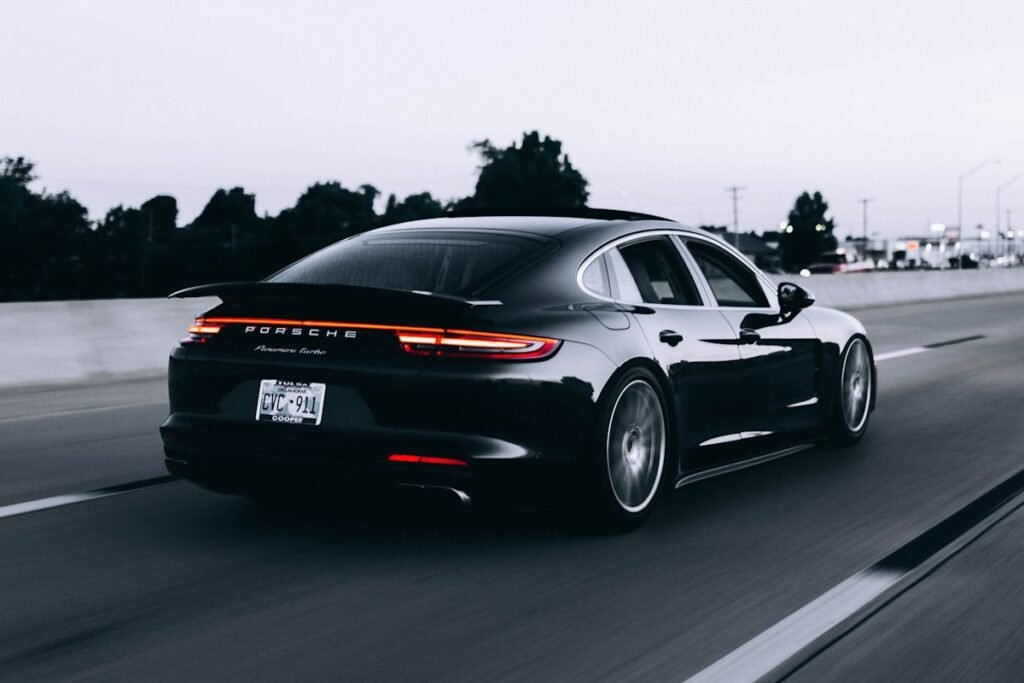
Premium market where savings are most visible. 911, Boxster, Cayman, Macan and Panamera. On models above €60,000, savings can exceed €15,000. Specialist technical verification is mandatory.
Common Risks and How to Avoid Them
Sales Site Fraud
Never buy cars below 20% of average market price. “Too good” prices are almost always scams. Always verify seller: physical address, company registration, reviews on independent platforms. Only use SEPA transfers (reversible) for deposits and never pay in cash or cryptocurrency.
Tampered Mileage
Real problem in Germany too. Always check km history on platforms like Carpass or Autovista. Compare km from last TÜV inspection with current odometer. Discrepancies >10% are red flag.
Undeclared Structural Damage
Some German dealers hide minor accidents. For cars above €20,000, hire independent certified ADAC inspector (€200-€400). Checks bodywork, mechanics, interior and documents. 100% worth the investment to avoid surprises.
Hidden Costs
Some dealers don’t include German registration or documentation fees. Confirm in writing that the price includes: Fahrzeugbrief, European COC, temporary export registration valid 5 days. Transport is not included unless explicitly specified.
Direct Import vs Professional Importer in Portugal
You have two main options:
Do it yourself (DIY)
Advantages: full control, greater savings (no middleman margin). Disadvantages: lots of time invested (40-80 hours), high technical risk if you lack knowledge, trip needed to see the car or dependence on photos/videos, complex bureaucratic legalisation process.
Buy via Professional Importer
Advantages: turnkey process (2-8 weeks from choice to registration), technical inspection included, legalisation fully handled, zero stress. Disadvantages: importer margin (typically €1,500-€3,500 per car), slightly less savings versus DIY.
For those who value time and security, professional importers in Portugal offer reasonable quality/price ratio. Important: validate reviews, history, delivery timelines and warranties offered before moving forward.
When Should You Seek a Specialist Lawyer?
For cars above €50,000, or in case of dispute, consider hiring a lawyer specialising in European automotive law. Typical costs: €300-€800 for contract review, up to €2,000-€5,000 in case of judicial process. For standard cars below this value, the process is typically linear and doesn’t require specific legal advice.
German and Dutch Marketplaces: Where to Search
The main marketplace carros usados used by Portuguese buyers are mobile.de (the largest deutsche automarket, German equivalent of OLX with millions of listings), autoscout24.de (second largest), mobile.nl and autoscout24.nl (main holland auto market), auto.de, wirkaufendeinauto.de and regional market auto platforms. For Portuguese-language searches dedicated to sites to import German cars, filtering by “export” or “ausfuhr” in advanced filters eliminates 80% of vehicles that don’t qualify for direct exportation.
Frequently Asked Questions
Can I import a new car from Germany?
Yes, but the process is different from used ones. New cars have temporary 5-day registration for transport, pay full ISV (without depreciation discounts) and have no TÜV history to validate. Cars with 6-18 months and 10-30k km are the sweet spot for import — already past initial depreciation but keep factory warranty.
How long does the complete process take?
DIY: 6-10 weeks from decision to buy until having Portuguese registration. With professional importer: 3-6 weeks. Variables affecting timeline: transport availability, response times from German dealers, Portuguese Finance/IMT workload and vehicle documentation.
Do I need to speak German?
Not necessarily. Large German dealers have salespeople who speak fluent English, mobile.de allows automatic translation of listings and official documents (Fahrzeugbrief) are translatable by sworn translators in Portugal for €50-€150. For complex negotiations, consider hiring bilingual intermediary.
What if the car has problems after import?
For used cars, German warranty isn’t automatically transferable to Portugal — depends on the seller. New or near-new cars with factory warranty maintain coverage in official workshops in Portugal (BMW, Mercedes, Audi, VW have European networks). For extras, you can hire private warranties like Opteven for €500-€1,500/year.
Is it worth importing electric car from Germany?
In 2026, with Portuguese government incentives, new electric cars have competitive prices in Portugal. It makes sense to import used premium electric (Tesla Model S/X, Porsche Taycan, Audi e-tron GT) where proportional savings remain high. For volume electric (ID.3, ID.4, Chinese models), the difference is marginal.
Are You Looking for Clients for Your Importation Business?
Are you a dealership or professional importer?
We specialise in digital marketing for car importation businesses: SEO websites that rank on Google, qualified lead generation and optimised Google Ads for the niche. Our sector clients generate on average +180 qualified leads/month.
For those who professionalise this activity — importation dealerships, independent importers, emerging platforms — the Portuguese market offers consistent growth opportunity. Read our complete guide to digital marketing for car importers with real sector benchmarks, converting channels and realistic budgets.
Importing cars from Germany is a profitable process when done with knowledge. For individual buyers, savings of 15-35% are realistic and access to unique rare versions. For those who profressionalise this activity, the Portuguese market offers consistent growth opportunity — provided they combine technical knowledge with effective digital marketing to capture qualified clients.